Kitchen & Dining
How to Clean Soapstone Countertops Without Damage

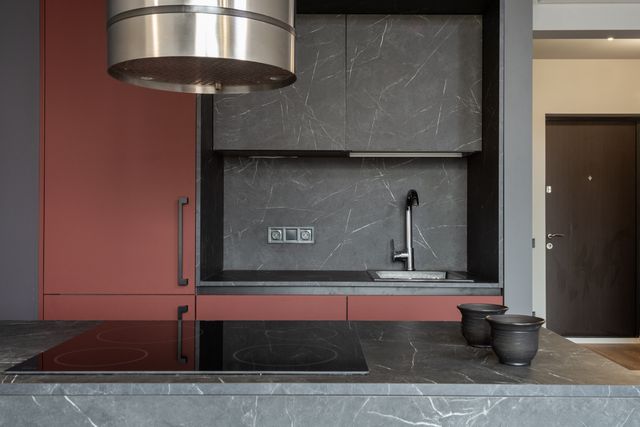
Soapstone is a soft, talc-rich stone that needs no sealer and cannot etch from lemon juice or wine, which already sets it apart from granite, quartz, and most other countertop materials. Learning how to clean soapstone countertops correctly is less about scrubbing harder and more about understanding what the stone actually needs, which is very different from what most kitchen counters require.
This guide covers daily cleaning, stain and scratch removal, the mineral oil debate, the mistakes that dull or crack soapstone, and how its upkeep compares to quartzite and slate. Each section is written to answer one specific question, so you can jump to the part that matches your situation instead of reading a wall of general stone-care advice.
Most soapstone guides repeat the same three steps and stop there. This one goes further: it explains why soapstone darkens over time instead of staying gray, when oiling is actually optional versus recommended, and which common cleaning products will strip the patina you’re trying to build. That distinction matters more with soapstone than with almost any other counter material, because the “damage” people report is usually just uneven color, not structural harm.
What Makes Soapstone Different From Quartzite, Slate, and Other Stone Counters
Soapstone is a metamorphic rock made mostly of talc, which makes it softer and less porous than granite, quartzite, or slate. That softness is the entire reason its cleaning routine looks different: soapstone can be scratched by abrasive pads, but it cannot be etched by acid or stained by oil the way marble can. It also has no sealed surface to protect, since it isn’t sealed in the first place.
Quartzite, despite the similar name, is a much harder stone that behaves more like granite and typically does require periodic sealing. Slate sits somewhere in between — dense and low-maintenance, but still porous enough that spills should be wiped up reasonably quickly. Cork flooring belongs to a different category altogether, since it’s a finished wood product sealed with wax or polyurethane rather than oiled, but the comparison is still useful: like soapstone, cork is soft enough to dent and scratch under daily wear, so both materials reward gentler tools over harsher ones. Knowing which category your material falls into prevents you from applying granite-style sealing habits to a stone that doesn’t need them.
Soapstone doesn’t need a sealer and can’t be etched by acid the way marble can, so its cleaning routine relies almost entirely on plain dish soap, warm water, and a soft cloth — the same three tools handle spills, food prep residue, and everyday fingerprints without any specialty stone cleaner.
How to Clean Soapstone Countertops Every Day

A soapstone counter gets wiped, not scrubbed: warm water and a few drops of mild dish soap on a soft cloth or sponge, then a dry towel pass to prevent water spotting. That short routine covers spills, crumbs, and general food prep residue, and it’s genuinely all the stone needs on a normal day — no separate stone cleaner, no polish, no weekly deep clean.
Avoid anything abrasive, including scouring pads, powdered cleansers, or the rough side of a sponge, since soapstone’s softness means it scratches more easily than granite or quartz. A microfiber cloth works well because it lifts residue without adding fine scratches that eventually make the surface look hazy under direct light.
- Wipe spills promptly, especially oil-based ones, so they don’t sit long enough to darken unevenly
- Reach for dish soap and warm water as the default for nearly every spill or mark
- Dry the surface after wiping to prevent water spots from forming
- Skip disinfecting wipes with citrus oils, since the residue can leave a dull film over time
- Never use bleach-based cleaners as a daily habit, even though soapstone can tolerate occasional exposure
Our take: skip the specialty “stone cleaner” sprays sold at hardware stores for soapstone specifically. They’re formulated mainly for sealed stones like granite and often contain conditioning agents that build up unevenly on soapstone’s unsealed surface, creating the exact blotchy look people are trying to avoid.
Removing Stains, Rings, and Scratches From Soapstone

Most surface stains on soapstone lift with a paste of baking soda and water, worked in with a soft cloth for 30 to 60 seconds and rinsed clean. This works specifically because soapstone’s density keeps most pigments from soaking into the stone the way they would with a porous surface like unsealed slate tile — what looks like a stain on soapstone is almost always residue sitting on top, not color that has actually penetrated the surface.
Scratches are handled differently, and this is where soapstone actually has an advantage over harder stones. Because it’s soft, fine scratches can be sanded out with 220-grit sandpaper, moving in small circles, followed by a coat of mineral oil to blend the sanded area back into the surrounding patina. Deeper gouges may need 120-grit sandpaper first, working up through finer grits, though this is a task worth doing carefully since over-sanding creates a lighter patch that takes weeks of oiling to match the surrounding stone.
| Issue | Fix | Tools Needed |
|---|---|---|
| Light surface stain | Baking soda paste, gentle scrub | Baking soda, soft cloth, water |
| Water spots | Wipe dry immediately after cleaning | Clean dry towel |
| Fine scratches | Sand with 220-grit, then oil | Fine sandpaper, mineral oil, cloth |
| Deep gouges | Sand with 120-grit, then finer grits, then oil | Sandpaper set, mineral oil, cloth |
| Dried food residue | Soften with a damp cloth, then wipe | Warm water, soft cloth |
How Often to Oil Soapstone Countertops (and Whether You Should)

Oiling soapstone is optional, not required, and it exists purely for appearance rather than protection. Untreated soapstone will darken naturally on its own over months of use as it’s exposed to air, water, and cooking oils, arriving at roughly the same deep charcoal color eventually — mineral oil just speeds up and evens out that process.
For anyone who wants the darker look right away, apply food-grade mineral oil with a soft cloth once a week for the first month, then taper off as the patina builds and the surface holds its color longer between applications. Vermont Soapstone Company, one of the longest-operating soapstone quarries and fabricators in the United States, is a useful real-world reference point here, since the stone it sells has been going through this same oiling and darkening process in kitchens for generations. Some homeowners choose to skip oiling entirely and let the counter darken on its own timeline, which is a completely legitimate option and one soapstone tolerates better than granite or quartzite ever could, since neither of those stones develops a comparable living patina.
According to the Natural Stone Institute, soapstone’s high talc content is what makes it soft enough to sand and oil at home in the first place, unlike quartzite or granite, which are far too hard for that kind of do-it-yourself repair. That single property — softness from talc — explains almost every difference in how soapstone is cleaned, repaired, and maintained compared to harder stone counters.
This doesn’t apply if your soapstone counter is outdoors or near a heat source like a range hood vent, since oil can go rancid faster in those conditions and may need more frequent light reapplication rather than the standard monthly schedule.
Common Soapstone Cleaning Mistakes That Cause Damage

Treating soapstone like granite is the most frequent mistake, and sealing is the clearest example: a sealer traps moisture under a film that eventually peels or clouds. Soapstone was never designed to hold a sealer, since its density already blocks most liquid absorption on its own — unlike slate tile or quartzite, which often benefit from sealing precisely because they’re more porous.
Vinegar-based or citrus cleaners cause a quieter problem when used routinely, since people assume that because soapstone can’t etch like marble, acid must be automatically safe on it. It won’t damage the stone chemically, but repeated acidic contact strips away built-up mineral oil patina faster than normal wear, leaving visible lighter patches where the countertop is used most, like around the sink and stovetop.
Hot cookware set directly on soapstone without a trivet is a smaller but still avoidable risk. The stone itself resists heat well, and outlets like Bob Vila regularly note that even heat-tolerant stone counters can develop localized dulling from repeated rapid temperature swings, especially where mineral oil has built up on the surface. A trivet or hot pad avoids the issue entirely and costs far less than resanding and reoiling a damaged section of counter.
Soapstone vs. Quartzite vs. Slate: Cleaning Comparison

Choosing between these three stones often comes down to how much upkeep you’re willing to do. Soapstone needs the least chemical maintenance but the most patience for its color to develop; quartzite needs periodic resealing but resists scratching far better; slate lands in the middle on both counts.
| Material | Needs Sealing? | Scratch Resistance | Routine Cleaning |
|---|---|---|---|
| Soapstone | No | Low to moderate | Dish soap and water |
| Quartzite | Yes, commonly every year or two | High | pH-neutral stone cleaner |
| Slate (tiles or counters) | Recommended, not always required | Moderate to high | Warm water, occasional mild soap |
If long-term low maintenance and a hand-worn look matter more to you than scratch resistance, soapstone is the more forgiving choice, since scratches can be sanded out at home rather than requiring professional refinishing, which is often the case with quartzite chips.
Frequently Asked Questions
Can I use vinegar to clean soapstone countertops?
Vinegar won’t etch or chemically damage soapstone the way it would marble or limestone, so occasional use is safe. Regular use is discouraged, though, because the acidity gradually strips the mineral oil patina, leaving uneven light and dark patches that take weeks of reoiling to blend back together. For daily cleaning, plain dish soap and warm water are a better default.
Does soapstone need to be resealed like granite?
No, soapstone never needs sealing, and applying a sealer to it can actually cause problems by trapping moisture under a film. This is one of the biggest differences from granite, quartzite, and even some slate installations, which typically need resealing every one to two years to stay stain-resistant. Soapstone’s density already limits liquid absorption without any sealer at all.
Why is my soapstone counter turning gray and blotchy instead of black?
Uneven graying usually means the mineral oil has worn off in high-use areas faster than in low-use ones, creating a patchy look rather than a uniform patina. Reapplying oil evenly across the whole surface, rather than just the faded spots, usually restores a consistent tone within a day or two. If blotching persists after oiling, a light sanding of the affected area followed by oil typically resolves it.
Is soapstone worth it compared to quartz or granite for a busy kitchen?
Soapstone is worth it for kitchens where a hand-finished, evolving look is appealing and where the household is comfortable with occasional light maintenance like sanding out scratches. It’s a harder sell for households that want a counter to look identical on day one and day one thousand, since soapstone’s whole character is built around visible aging. Quartz stays more visually static and needs almost no maintenance, which suits a different kind of household.
What’s the biggest mistake people make when cleaning soapstone for the first time?
The most common first-time mistake is reaching for a granite or quartz-specific stone cleaner out of habit, assuming it’s the safe, professional choice. These products are formulated for sealed, harder stones and often leave residue or an uneven sheen on soapstone’s unsealed surface. Dish soap and water handle the vast majority of cleaning needs without that risk.
How do I clean soapstone before applying mineral oil for the first time?
Wash the entire surface with dish soap and warm water, then dry it completely before oiling, since trapped moisture under the oil layer can cause uneven absorption. Let the counter air dry for at least 20 to 30 minutes after washing to be certain no residual water remains in any seams or edges. Applying oil to a fully dry surface is the single biggest factor in getting an even, streak-free finish on the first attempt.
Final Thoughts
The short version of how to clean soapstone countertops is that the stone rewards a lighter touch than most people expect: dish soap, a soft cloth, and either patience or a bottle of mineral oil are genuinely enough for the life of the surface. The mistakes that cause real problems almost always come from applying granite or quartz habits, like sealing or heavy chemical cleaners, to a stone that was never designed for them.
If you’ve just moved into a home with soapstone counters or had them installed recently, start by washing the surface with dish soap and water, letting it dry fully, then deciding whether you want the deeper patina now through weekly oiling or a slower, natural darkening over the coming months.

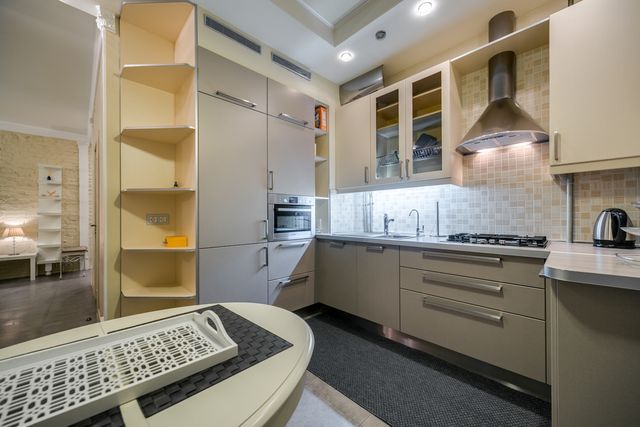
The same small kitchen painted two different colors can feel like two different rooms, even though the square footage never changes. Small kitchen colors aren’t just a style choice — they change how tall the ceiling looks, how far the walls seem to sit, and how much natural light bounces back into the room.
This guide walks through which small kitchen colors actually open up a tight footprint, when dark cabinets are worth the trade-off, how two-tone layouts work in real kitchens, and which paint sheens and undertones hold up against grease and daily wear. Every recommendation here is tied to a specific reason, not just a trend list.
Most small kitchen color guides repeat the same “go light and airy” advice without explaining why some light colors flatten a room while others make it glow, or why a dark lower cabinet can make a small kitchen feel more finished, not smaller. This article covers the mechanics behind the color choice — light reflectance, undertone, and contrast placement — so the picks hold up once the paint is dry.
What Colors Work Best in a Small Kitchen?
The best small kitchen colors are light, warm-toned neutrals with a high light reflectance value (LRV) — a measure of how much light a paint color bounces back into a room — paired with one deeper accent color used sparingly on an island, lower cabinets, or a single wall. A monochrome light palette makes a compact kitchen feel larger, while a small dose of contrast keeps it from looking flat or clinical.
Color affects a small kitchen in three ways: how much light it reflects, how it makes the ceiling and walls feel closer or farther away, and how it interacts with the metal, wood, and stone finishes already in the room. A pale wall with warm undertones reflects daylight back into the room instead of absorbing it, which is why soft whites, greiges, and light sages tend to outperform stark cool tones in tight, lower-light spaces.
Light Kitchen Colors That Make a Small Space Feel Bigger
Warm whites, soft greige, pale sage, and light mushroom tones are the most reliable choices for making a small kitchen feel larger, because they reflect more daylight and create less visual break between wall and ceiling. According to a trend report from cabinet manufacturer MasterBrand, light-stained wood is now the most preferred cabinet finish among homeowners, with off-white ranking second and white third — a shift toward warmth and texture rather than the flat, cool white kitchens that dominated the last decade.
A few light colors worth shortlisting for small kitchens:
- Warm white or cream — reflects the most light, pairs with almost any hardware finish
- Soft greige — a gray-beige blend that hides smudges better than pure white
- Pale sage or eucalyptus — adds color without darkening the room
- Light mushroom or taupe — reads as neutral but warmer than gray
- Dusty blue — cool but pale enough to stay airy in low light
Stark, cool whites can actually work against a small kitchen if the room doesn’t get much natural light, since they can read gray or sterile under warm bulbs. A warm white with a hint of yellow or beige undertone tends to look brighter in person than a technically “whiter” cool white.
Best Small Kitchen Cabinet Colors
For small kitchen cabinet colors specifically, the safest performers are warm white, soft gray, and sage green on the full run of cabinetry, while navy, forest green, and black work best when confined to an island or lower cabinets only. Cabinets take up more visual real estate than walls in most small kitchens, so the color choice there has an outsized effect on how open the room feels.
| Cabinet Color | Best Used On | Effect in a Small Kitchen |
|---|---|---|
| Warm white / off-white | Full run (upper and lower) | Maximizes reflected light, safest resale choice |
| Soft gray | Full run or lowers only | Modern look, hides smudges better than white |
| Sage or olive green | Full run in bright rooms | Adds warmth without heaviness |
| Navy or deep blue | Lowers or island only | Grounds the room without lowering the ceiling line |
| Black or charcoal | Island or accent wall only | High drama but risks feeling cave-like on full runs |
Our take: for a kitchen under 100 square feet, we’d default to warm white or soft sage on the full cabinet run and save any bold color for the island or a single bank of lower cabinets. That combination gets the light-reflecting benefit of a pale palette while still giving the room a focal point, which flat all-white kitchens often lack.
Can Small Kitchen Black Cabinets Actually Work?
Black cabinets can work in a small kitchen, but only with strong task lighting, a light-colored counter and backsplash for contrast, and either a partial application (island or lowers) or an open floor plan that lets the black bleed visually into an adjoining room. Used on every surface in a closed, dim kitchen, black cabinets tend to make the walls feel closer and the ceiling lower.
Designer Michelle Vassallo of MV Architects uses this same high-contrast principle with saturated cabinet colors, pairing a deep tone like Farrow & Ball’s De Nimes against crisp white walls painted in Benjamin Moore Chantilly Lace so the color reads as intentional rather than closing in the room. The same logic carries over to black: dark cabinets need a light counterweight somewhere nearby, whether that’s the walls, the counters, or the ceiling.
This approach doesn’t apply if your small kitchen has one small window or no window at all — in low-light galley kitchens, black or near-black cabinets on every surface will almost always read smaller and darker, regardless of how much contrast you add elsewhere.
Two-Tone Kitchen Cabinets for Small Kitchens
Two-tone kitchens split the palette by function: a lighter color on the upper cabinets, where the eye naturally travels, and a deeper color on the lower cabinets, where hands, spills, and scuff marks actually happen. That split gets you a small kitchen with visible personality and a practical reason for it — the lower cabinets take the daily wear, while the upper run stays light enough that the ceiling never feels boxed in.
A common formula pairs a charcoal or navy lower cabinet with a soft white or warm taupe upper cabinet, finished in one consistent hardware tone such as brushed brass or matte black. Sticking to a single hardware finish across both tones keeps the mix from looking like two unrelated kitchens stacked on top of each other.
Two-tone rules worth following
- Keep the darker tone below eye level — on lowers, an island, or a peninsula
- Match the darker cabinet’s undertone to the lighter one (both warm or both cool)
- Use one consistent hardware finish across both tones to avoid visual clutter
- Stop the dark tone at a natural break point, such as a window line or open shelving
Choosing Wall Paint, Backsplash, and Trim Colors
Wall paint in a small kitchen should sit one or two shades lighter than the cabinets, with a satin or eggshell finish that wipes clean without showing a heavy sheen under overhead lighting. According to Sherwin-Williams’ 2026 color forecast, sunset-inspired palettes — creams and beiges layered with warm, deep accent tones — are trending for kitchens that want warmth without going fully neutral or fully bold.
Quick summary: a small kitchen with a warm white or pale sage base and a single deeper accent color tends to feel more finished — and sell better in photos — than one built from three or more competing colors, simply because there’s one clear focal point instead of several fighting for attention.
Trim and window casing generally look best in the same white as the ceiling rather than matching the wall color exactly, since that keeps the room’s vertical lines clean and doesn’t visually chop the space into segments. If you’re weighing paint against a full remodel, it helps to know where color decisions fit into the overall small kitchen remodel budget before locking in cabinet finishes, since custom paint-matched cabinetry costs more than a stock white or gray line.
For backsplash tile, a color that’s a shade or two lighter than the counter — rather than an exact match — adds enough separation to keep the room from looking like one flat block of material. Many of the same undertone-matching principles that apply to small living room color choices carry over directly to an open-plan kitchen, since both spaces benefit from the same light-bouncing logic.
Common Mistakes to Avoid With Small Kitchen Colors
The most common small kitchen color mistake is mixing cool and warm undertones in the same room — for example, a cool gray cabinet next to a warm beige counter — which creates a visual clash that makes the whole space feel busier and smaller than it is. Testing a paint swatch against your actual counter and flooring samples, not just on a blank wall, catches this before the cabinets are ordered.
A few other patterns worth watching for:
- Using more than two main colors plus one accent — in a room this size, each extra color reads as a full wall or cabinet run, not a small detail
- Choosing a trendy dark color for full cabinet coverage without adding under-cabinet or overhead task lighting to compensate for the light it absorbs
- Matching the backsplash color exactly to the counter, which erases the one seam line that gives a small kitchen a sense of depth
- Skipping a sample board and relying on a paint chip under store lighting, which almost never matches how a color looks against a small kitchen’s limited natural light
If you’re also updating countertops as part of the color plan, keep in mind that some natural stones need specific care once the palette is set — for instance, homeowners with soapstone counters should check how to clean soapstone without damaging the finish before choosing a cleaning routine that might dull a carefully matched color scheme.
Frequently Asked Questions
What is the best color to make a small kitchen look bigger?
Warm white and soft greige are the most reliable colors for making a small kitchen look bigger, because they have a high light reflectance value and bounce daylight back into the room instead of absorbing it. Pale sage and light mushroom tones perform almost as well while adding a bit more warmth than a flat white. The key is picking a shade with a warm undertone rather than a stark, cool white, which can look gray in low light.
Should small kitchen cabinets be light or dark?
Light cabinets are generally the safer choice for very small or low-light kitchens, since they reflect more light and keep the room feeling open. Dark cabinets can still work well if they’re limited to an island or lower cabinets, paired with strong lighting, and balanced by a lighter wall or counter color. Full dark cabinetry on every surface tends to only work in small kitchens that open directly into a brighter adjoining room.
Are two-tone kitchen cabinets a good idea for a small kitchen?
Yes — two-tone cabinets, with a light upper and a darker lower, are one of the most practical ways to add color to a small kitchen without losing the open, airy feel. The light upper cabinets keep the ceiling line feeling tall, while the darker lower cabinets ground the room and hide scuffs near the floor. This approach works better in small kitchens than an all-dark or all-bold palette.
Is white still a good choice for small kitchen cabinets in 2026?
Yes, with a caveat: warm white and off-white have overtaken the starker, cooler whites that were common a few years ago. A fully white kitchen with zero contrast can also read flat or sterile rather than spacious, which is why most small white kitchens now add a colored island, a patterned backsplash, or warm-toned hardware to keep the room from feeling like one blank surface.
What’s a common mistake people make when picking small kitchen colors?
The most common mistake is mixing warm and cool undertones — for example, a cool blue-gray cabinet against a warm beige floor — which creates visual tension that makes the room feel busier and smaller. Another frequent error is choosing more than two or three main colors, which breaks up a small room instead of letting it read as one cohesive space. Testing swatches against real flooring and counter samples helps avoid both problems.
Do dark colors always make a small kitchen feel smaller?
Not always — dark colors make a small kitchen feel smaller mainly when they’re used on every surface in a room with limited natural light. When confined to an island, lower cabinets, or a single accent wall, and balanced against lighter counters or walls, dark colors can add depth and personality without shrinking the room visually. Lighting and contrast placement matter more than the color itself.
Final Thoughts
The single most important decision when picking small kitchen colors isn’t which trendy shade to choose — it’s where to place contrast. A light, warm-toned base on the majority of walls and cabinets keeps the room feeling open, and one deliberate deeper color on an island, lower cabinets, or backsplash gives the space personality without working against the light. Trends will keep shifting between all-white kitchens and moodier, saturated palettes, but the underlying mechanics of light reflectance and undertone matching stay the same either way.
Before buying paint or ordering cabinet doors, pull a sample of your top two color choices and tape them to the wall next to your actual counter and flooring material for a full day, checking how they look under both morning and evening light — that single step catches more color mismatches than any swatch book comparison.
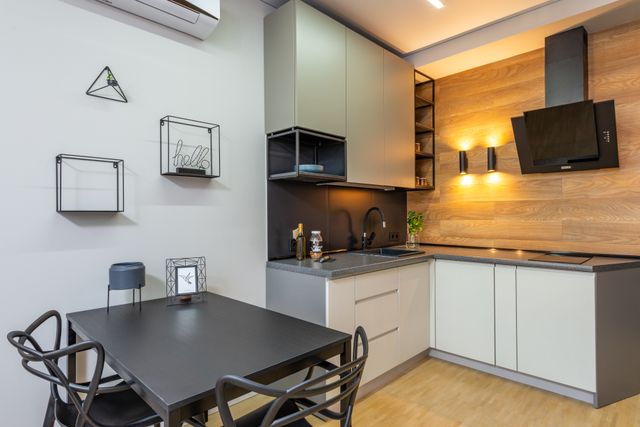
A kitchen under 100 square feet still needs to seat people, and according to a 2025 Houzz kitchen trends survey, 13% of renovated U.S. kitchens fall into exactly that category. That statistic matters because most small kitchen table advice online is written for open-concept great rooms, not the 8-by-10 galley kitchens and narrow nooks where a huge share of American homeowners actually eat breakfast.
This guide covers the table shapes, sizes, and finishes that hold up in tight kitchens, plus the clearance numbers that separate a table you can live with from one you’ll be squeezing past every morning. It pulls from professional design clearance standards rather than generic “measure your space” advice, so every recommendation ties back to a specific number you can check against your own floor plan before you buy.
What sets this guide apart is the shape-first approach: instead of listing random tables, it walks through which shape solves which layout problem, then narrows into color and finish once the shape is settled. If you’re also mid-remodel, it’s worth reviewing small kitchen remodel budget expectations first, since table placement often shifts once cabinet and appliance layouts are finalized.
How Much Clearance a Small Kitchen Table Needs
Measure clearance before you shop by style. A small kitchen table needs a minimum of 32 inches from the table edge to the nearest wall on any side where no one walks past a seated diner, rising to 36 inches if people slide past and 44 inches if they need to walk past fully, according to the National Kitchen and Bath Association (NKBA).
This is the number most buying guides skip, and it’s the one that determines whether a table actually fits. A 42-inch round table looks compact on a showroom floor, but if it sits against a single walkway wall, the room depth needed grows once you add clearance on the open side plus chair pull-out space, so a table’s listed dimensions only tell half the story. Measure your available footprint and subtract the clearance numbers above before you shop by style — the table dimensions come second.
For kitchens under 100 square feet, a table footprint no larger than roughly 30 by 48 inches is the realistic ceiling. Anything with drop leaves or extension capability is worth considering as a first option rather than an afterthought, since it lets you flex between everyday two-person use and occasional four-person seating without permanently claiming floor space.
| Kitchen width available for table + clearance | Recommended table footprint | Realistic seating |
|---|---|---|
| Under 7 feet | 24–30 in. round or 20 in. drop-leaf (closed) | 2 |
| 7–9 feet | 36 in. round or 24 x 42 in. rectangle | 2–4 |
| 9–11 feet | 30 x 48 in. rectangle or oval | 4 |
| 11+ feet | 36 x 60 in. rectangle with leaf | 4–6 |
Small Rectangle and Square Kitchen Tables
Galley kitchens and narrow nooks generally fit a small rectangle kitchen table better than any other shape, since it maximizes seating along the long wall while a depth under 30 inches keeps it clear of the 36-inch clearance line on the open side. Square tables solve a different problem: corner nooks and bay windows where a rectangle’s extra length would eat into walkway space unnecessarily.
For a rectangle, a 24-to-30-inch width paired with a 42-to-48-inch length is a reasonable starting range — as a rule of thumb, wide enough for place settings without a table that overwhelms the room. Compact-format retailers such as IKEA and West Elm both carry rectangular tables sized for apartment-scale kitchens, which is a useful starting point if you’d rather browse existing options than build a custom size from scratch.
Square tables in the 30-to-36-inch range seat four people in a corner without the visual bulk of a rectangle. The tradeoff is that a square table can’t take a leaf the way a rectangle can, so if you expect your household size to grow, a rectangle with extension capability keeps that option open in a way a fixed square table doesn’t. If your kitchen opens into a living area rather than standing alone, the square-versus-rectangle decision in small living room dining combos works through the same logic and is worth a look.
Small Drop-Leaf Kitchen Tables
For kitchens under 80 square feet, a drop-leaf table is usually the strongest single option because it can shrink to 18–20 inches deep against a wall for daily use, then expand to a full 36–40 inches when both leaves are raised for guests. That dual-mode design solves the core small-kitchen problem: needing seating for four occasionally without permanently sacrificing floor space for it.
Match the leaf mechanism to how often you’ll actually use it — a table folded daily needs sturdier hinges than one raised twice a year for holidays. Solid wood drop-leaf tables tend to hold up better to repeated folding over years than veneer versions, where the leaf hinge is more likely to loosen with use.
Here’s the honest limitation: drop-leaf tables trade daily stability for flexibility. With both leaves down, most models offer a narrow surface that isn’t ideal as a prep or homework table, so this style suits households that eat at set times rather than using the table as an all-day work surface. Households that need the table available all day are better served by a fixed rectangle or square instead.
Small Round and Oval Kitchen Tables
Irregular kitchen layouts tend to favor a round table because it has no corners to catch on cabinet edges or walkway traffic, letting diners shift slightly without needing exact clearance on every side, and it reads as less visually bulky than a rectangle of similar capacity — useful when the table sits in direct sightline from the entry.
A 36-inch round table seats four in a pinch, though elbow room runs tight at that size; 42 inches is more comfortable where the floor space allows it. Oval tables split the difference between round and rectangle, keeping the corner-free edges of a round table while adding 8–12 inches of length for a fifth place setting — a strong pick for kitchens that run narrow but slightly longer than they are wide.
In a kitchen narrower than 8 feet with a single walkway along one side, round beats rectangle for a specific reason: the lack of corners means the table can sit closer to the 32-inch clearance minimum without anyone catching a hip on a corner while passing, which a rectangle of the same footprint doesn’t allow.
Small Black, White, Wood, and Vintage Kitchen Tables
Finish affects how large a small kitchen table appears more than its actual dimensions do. A small black kitchen table reads as compact and grounded against light cabinetry, which is why it’s common in white or pale-gray kitchens where a light wood table would blend into the counters and disappear rather than anchoring the room.
A small white kitchen table does the opposite: it recedes into a bright kitchen, which reduces visual clutter but can also wash out definition if the walls and counters are already white. It works best in kitchens with some contrast elsewhere — a colored backsplash, dark cabinet hardware, or patterned flooring — so the table doesn’t disappear entirely.
A small wood kitchen table in a mid-tone finish is the safer long-term choice if you’re not fully settled on your kitchen’s color direction, since wood tones are easier to work around after a repaint or decor swap than a black or white lacquer finish locks you into. A small vintage kitchen table — a refinished mid-century piece or a reclaimed farmhouse table scaled down — fits this same logic and adds character a mass-produced finish can’t, though it’s worth checking that vintage joinery and leaf mechanisms are still structurally sound before committing to daily use. Repainting cabinets doesn’t force a table swap if the finish was chosen with that flexibility in mind, which is the reasoning behind small living room color strategies as well — the same light-versus-anchor logic governs both rooms.
Small Kitchen Nook and Hutch Ideas
A nook works best when the table shape mirrors its geometry rather than fighting it: square or round in a bay-window nook, rectangle against a straight-wall nook. Built-in bench seating on one or two sides can free up 10–15 inches of the clearance a full chair set requires, since a bench needs less pull-out room than a chair does.
A small hutch positioned near the table adds storage without a separate dining sideboard, which matters in kitchens too tight for both. When choosing a hutch, prioritize:
- Depth under 16 inches so it doesn’t intrude on the table’s clearance zone
- Open or glass-front upper shelving to keep the wall visually light
- A width that matches or is narrower than the table beside it
- Closed lower cabinets for everyday items, open upper shelves for display pieces
Surface material near the table matters too. Soapstone counters, for instance, need no sealer and resist etching from acidic spills — a relevant detail if your nook backs directly onto a stone counter that will inevitably catch a splash. See how to clean soapstone countertops for the specifics on that material. And before finalizing furniture purchases, applying the same measure-first approach used for small-space furniture layouts generally — confirming clearances with a tape measure rather than eyeballing them — carries over directly from living rooms to kitchen nooks.
Frequently Asked Questions
What is the smallest table that can comfortably seat four people?
A 36-inch round table or a 30-by-48-inch rectangle is the smallest footprint that seats four without cramped elbow room. Below those dimensions, four adults can technically fit but will have less than 24 inches of width per person, tighter than most people find comfortable for a full meal. A drop-leaf table that opens to 36–40 inches solves this without permanently occupying that much floor space.
Is a round or rectangular table better for a small kitchen?
It depends on the room’s shape more than personal style. Round tables suit small or irregularly shaped kitchens since they have no corners to catch on cabinets or walkways. Rectangular tables suit a kitchen with one long, straight wall, since they use that wall space more efficiently than a round table would.
How much space needs to stay clear around a kitchen table?
NKBA guidelines call for 32 inches minimum on sides with no foot traffic, and 36 to 44 inches on any side someone needs to walk past while another person is seated. A common mistake is measuring only the table and forgetting chair pull-out space, which typically adds another 18 to 24 inches beyond that clearance line.
Are drop-leaf tables practical for everyday use?
Households that eat at set times and want flexible guest seating tend to get the most out of a drop-leaf table. It’s a weaker fit for anyone using the table as an all-day prep or work surface, since the folded-down width is narrow. Solid wood versions with reinforced hinges outlast veneer models under daily folding.
Do small kitchen tables need to match the cabinets?
Not necessarily, and matching wood tones exactly can flatten a small kitchen’s visual definition. A table that contrasts moderately with the cabinets — black against white, or light wood against dark lower cabinets — tends to read as an intentional dining zone. The exception is a kitchen aiming for a fully monochromatic look, where matching tones is the deliberate goal rather than an oversight.
What table shape works best for a corner kitchen nook?
Square and round tables fit corner nooks more efficiently than rectangles, since they avoid the awkward unused triangle of space a rectangle’s straight edge leaves against an angled nook wall. A built-in bench along one or two sides further reduces the pull-out clearance a full chair set would need.
Final Thoughts
The single most important factor in choosing a small kitchen table isn’t the table at all — it’s confirming your kitchen’s actual walkway and seating clearance before you shop by style or color. Start by measuring those clearances with a tape measure this week, then shop by shape and footprint within that confirmed range rather than starting from a style you like and hoping it fits.
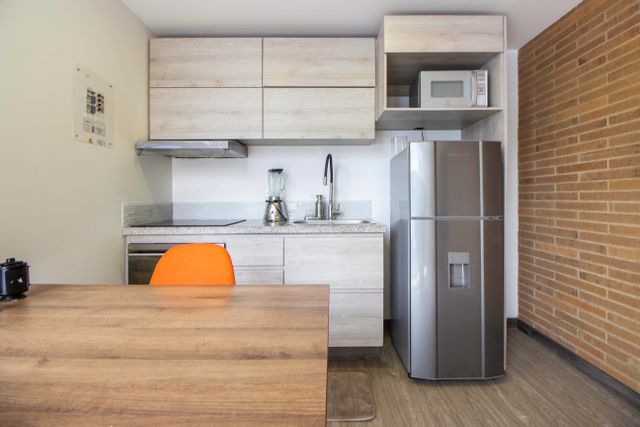
Small kitchen remodel cost typically falls between $10,500 and $20,000 for a 70- to 100-square-foot space in the United States, well under the $27,000-plus average usually quoted for full-size kitchens. That gap surprises many homeowners who assume “kitchen remodel” means a five-figure minimum no matter the room’s size, and it changes the entire planning conversation once the real numbers are on the table.
This guide breaks down what a small kitchen remodel actually costs by category, scope, and home age, including the specific line items that eat the most budget and the ones that barely move the needle. It also covers what changes when the kitchen sits inside an older house, where hidden wiring, plumbing, and structural quirks tend to push costs past what a generic calculator predicts.
Most cost guides online repeat the same national averages without separating a 70-square-foot galley kitchen from a 300-square-foot open-concept one, which is the exact distinction that determines whether a homeowner’s budget is realistic. This one is built specifically around small kitchens, with real before-and-after budget examples and category-by-category pricing instead of a single blended number.
How Much Does a Small Kitchen Remodel Cost in 2026?
A small kitchen remodel costs $10,500 to $20,000 on average, based on a 70- to 100-square-foot footprint priced at roughly $150 per square foot. That range covers a cosmetic refresh — new cabinet fronts, countertops, a backsplash, and updated appliances — without moving plumbing, gas lines, or walls. According to Angi, remodeling a kitchen costs about $150 per square foot on average, which is the baseline multiplier most contractors use to scope a project before finishes are chosen. That $150 figure is a blended average across every scope level; cosmetic-only work such as cabinet refacing typically prices closer to $85 to $120 per square foot, which is why the cosmetic tier in the table below starts below the blended benchmark.
Budgets shift quickly once the scope changes. A cosmetic-only update can land under $10,000 if cabinets are refaced rather than replaced and countertops stay laminate. A small kitchen with full cabinet replacement, stone counters, and new flooring commonly lands between $18,000 and $30,000. Moving a sink, adding an outlet, or relocating a range hood adds plumbing and electrical costs that a same-footprint refresh avoids entirely.
| Remodel Scope | Typical Cost (70–100 sq. ft. kitchen) | What’s Included |
|---|---|---|
| Cosmetic refresh | $6,000–$12,000 | Cabinet refacing, paint, hardware, laminate counters, new sink/faucet |
| Mid-range remodel | $12,000–$22,000 | New stock or semi-custom cabinets, quartz or granite counters, tile backsplash, new appliances |
| High-end remodel | $22,000–$35,000+ | Custom cabinetry, premium stone, layout tweaks, upgraded appliances, new flooring and lighting |
What Actually Drives the Price of a Small Kitchen Remodel
Square footage alone doesn’t set the price of a small kitchen remodel — cabinets, labor, and layout changes do. A tiny kitchen with a moved sink and relocated gas line can cost more than a slightly larger one where everything stays in place, because plumbing and electrical work is priced by the job, not the room size.
Most cost calculators price kitchens by square footage, but cabinetry — the single largest line item — is actually priced by linear foot of cabinet and counter run, not by room area. A 70-square-foot galley kitchen with 18 linear feet of cabinets can cost as much to outfit as a 120-square-foot kitchen with only 14 linear feet, which is one reason two kitchens both labeled “small” can land at very different price points. Cabinetry consumes an estimated 30% to 40% of a kitchen remodel budget, whether the kitchen is 70 square feet or 250. Stock cabinets run $100 to $300 per linear foot installed, semi-custom options run $155 to $500, and full custom work starts around $500 per linear foot and climbs from there.
Labor is the second major cost driver. Installation, demolition, and skilled trades — electrical, plumbing, tile — commonly account for an estimated 25% of the total project cost. A contractor pulling permits, coordinating subcontractors, and managing a compressed small-kitchen job site charges for that coordination even when the materials list is short.
Small Kitchen Remodeling Cost Breakdown by Category
Where does the money actually go in small kitchen remodeling cost? Cabinets and countertops together typically account for over half of a small kitchen remodel budget, with appliances, flooring, and backsplash filling out the rest. Knowing where the money goes makes it easier to identify which categories are worth spending more on and which ones can be trimmed without anyone noticing at resale.
| Category | Typical Cost Range (Small Kitchen) |
|---|---|
| Cabinets (refaced) | $4,000–$9,000 |
| Cabinets (replaced, stock/semi-custom) | $8,000–$15,000 |
| Countertops (laminate) | $1,200–$2,000 |
| Countertops (entry-level quartz) | $1,500–$2,500 |
| Appliance package (basic) | $2,000–$4,500 |
| Flooring | $1,000–$5,000 |
| Backsplash tile | $600–$1,800 |
| Sink and faucet | $680 installed (faucet ~$260, sink ~$420) |
| Painting (walls/trim) | ~$900 for a 150–250 sq. ft. kitchen |
Countertops are a category where material choice matters more than square footage. A small kitchen with just 20 to 25 square feet of counter space can install laminate for $1,200 to $2,000 or basic quartz for $1,500 to $2,500, a gap that narrows sharply once total surface area is this limited. That’s why premium stone often shows up in small kitchen remodels labeled “high-end” even on a modest total budget. New appliances are also part of this category — once everything is installed, our guide to cleaning kitchen appliances can help keep new purchases looking new for longer. Homeowners weighing durable natural stone against engineered options can also check our guide to cleaning and maintaining soapstone countertops before committing, since upkeep requirements vary widely between stone types.
Budget, Mid-Range, or High-End: What Each Tier Buys in a Small Kitchen
Three factors separate a budget small kitchen remodel from a high-end one: whether the existing cabinet boxes are kept, what countertop material is chosen, and how much custom work is involved. A budget remodel keeps the layout and boxes; a mid-range remodel replaces cabinets and upgrades counters; a high-end remodel adds custom work and premium finishes throughout.
| Tier | Cabinets | Countertops | Typical Total |
|---|---|---|---|
| Budget | Refaced or painted | Laminate | $6,000–$12,000 |
| Mid-range | Stock or semi-custom, replaced | Entry-level quartz or granite | $12,000–$22,000 |
| High-end | Semi-custom or full custom | Premium quartz, marble, or soapstone | $22,000–$35,000+ |
Our take: for most small kitchens, the mid-range tier delivers the best return relative to effort. Refacing alone often looks like a half-measure once new appliances and a backsplash sit next to old cabinet boxes, while a full custom build rarely makes sense in a 70- to 100-square-foot room where the linear footage of cabinetry is too short to showcase custom joinery or storage features. The tier in between is where the visual upgrade tends to match the spend most closely.
Measuring existing clearances carefully before ordering cabinets or appliances matters even more in a small kitchen than a large one, since there’s little margin for error in a tight footprint. The clearance and spacing principles covered in our guide to small-space furniture measurements apply just as directly to a compact kitchen layout as they do to a small living room.
Remodeling a Small Kitchen in an Old House: What Costs More
Old houses add cost to a small kitchen remodel in ways square-footage calculators never account for. An old house small kitchen remodel typically runs 15% to 30% more than the same project in a newer home, mainly because of outdated wiring, galvanized plumbing, and non-standard framing that show up once walls or cabinets come down. A kitchen built before the 1980s often needs an electrical panel upgrade or new circuits to safely run modern appliances, and that work isn’t optional once a permit is pulled.
Older homes also tend to have uneven floors, out-of-square walls, and plaster instead of drywall, all of which slow down cabinet installation and tile work. A contractor factoring in an extra day or two of leveling and shimming will price that time into the estimate, even on a kitchen that looks straightforward from the outside. Small kitchens in homes built before 1950 are the most likely to blow past the cost ranges above, since a single surprise behind the wall — outdated wiring, an old lead pipe, or an unexpected load-bearing wall — can add several thousand dollars to the project without warning.
One honest limitation worth stating up front: none of the cost ranges in this guide account for asbestos abatement, lead paint remediation, or structural repairs, which are common in homes built before 1978 and priced entirely separately from the remodel itself. If a pre-purchase inspection flagged any of those, budget for a specialist assessment before finalizing a kitchen contract.
For anyone trying to figure out how much usable kitchen space an older, smaller footprint actually allows, our breakdown of what fits in a 1,200-square-foot floor plan is a useful reference point for scaling expectations to the home’s overall size.
Small Kitchen Remodel Before and After: Real Budget Wins
Paint, hardware, and lighting — not a full gut renovation — usually produce the biggest transformation in a before and after budget small kitchen remodel. Repainting existing cabinet boxes and swapping dated brass pulls for updated hardware can visually reset a kitchen for $600 to $1,500, a fraction of a full cabinet replacement, and the photos tend to look dramatically different despite the modest spend.
- Cabinet refacing plus new hardware and paint: $4,000–$9,000, often the highest visual-impact-per-dollar change in a small kitchen
- Swapping laminate for entry-level quartz on an existing footprint: $1,500–$2,500, no demolition required
- Adding under-cabinet LED lighting: $200–$600, dramatically changes how the space photographs and feels at night
- New tile backsplash over existing counters: $600–$1,800, one of the fastest weekend-scale projects with a big before-and-after difference
Multiple industry cost-versus-value analyses put minor kitchen remodel resale recoup somewhere between 70% and 113%, depending on the year, methodology, and dataset used, making it among the highest-return categories of any home improvement project a homeowner can undertake without a full renovation.
That range comes largely from the Remodeling Cost vs. Value Report, though the exact figure shifts each year and varies by market. Either way, minor, same-footprint updates consistently outperform full gut renovations on a cost-recouped basis, which is worth weighing before assuming a bigger project automatically means a bigger payoff.
How to Keep a Small Kitchen Remodel on Budget
Staying under budget on a small kitchen remodel comes down to sequencing decisions correctly and avoiding scope creep once demolition starts. The following steps, taken roughly in order, prevent most of the overruns that push a $12,000 plan into an $18,000 invoice.
- Get three itemized quotes sized to your kitchen’s actual square footage and cabinet linear footage, not a generic “small kitchen” template quote — pricing swings significantly between a 70 sq. ft. galley and a 100 sq. ft. L-shape.
- Decide upfront whether cabinets get refaced or replaced. This is the earliest, highest-leverage decision in the whole project, since it determines which vendor quotes, lead times, and labor sequencing to pursue.
- Finalize appliance dimensions before cabinets are ordered — in a small kitchen, even a half-inch miscalculation on appliance width can force a costly cabinet rework.
- Set aside 10% to 15% of the total budget as a contingency fund. In a small kitchen, one hidden issue behind a single wall represents a much larger share of the total project than it would in a larger kitchen, so plan for it rather than reacting to it.
- Keep the existing plumbing and electrical footprint wherever possible, since relocating a sink or range typically adds $500 to $2,000 in labor alone.
Brands like IKEA, with its SEKTION cabinet system, and big-box retailers like Home Depot both offer stock and semi-custom cabinet lines priced well below custom shops. Either can be a reasonable starting point for a small kitchen where linear footage is limited and custom joinery wouldn’t be very visible anyway. Comparing quotes from both alongside a local cabinet maker before committing is one of the more reliable ways to confirm a fair price for the scope planned, since custom shops don’t always price-match what a small kitchen actually needs.
Frequently Asked Questions
How much is a kitchen remodel for a small kitchen, and what’s the average cost?
A small kitchen remodel, typically 70 to 100 square feet, costs $10,500 to $20,000 on average in the United States. Costs run lower for cosmetic-only updates like refacing and painting, and higher when cabinets are fully replaced or countertops are upgraded to premium stone. Homes older than 40 years often land at the higher end due to electrical and plumbing updates.
Is it cheaper to reface or replace cabinets in a small kitchen?
Refacing is almost always cheaper, typically costing $4,000 to $9,000 versus $8,000 to $15,000 for full replacement with stock or semi-custom units. Refacing works well when the existing cabinet boxes are structurally sound and the layout isn’t changing. It’s not a good option if the boxes are water-damaged, out of square, or if the kitchen needs additional storage the current layout can’t provide.
Does a small kitchen remodel add resale value?
Yes. Minor, same-footprint kitchen updates tend to return more of their cost at resale than almost any other home improvement category, with estimates commonly ranging from roughly 70% to just over 100% depending on the data source and year. Returns drop as spending shifts toward custom cabinetry, structural changes, or layout changes that don’t universally appeal to buyers.
What is the most common mistake homeowners make budgeting a small kitchen remodel?
The most common mistake is skipping a contingency fund, then treating the first hidden issue — old wiring, a leaking pipe, or subfloor damage — as an emergency rather than a planned expense. Setting aside 10% to 15% of the total budget upfront for surprises, especially in older homes, prevents a manageable problem from derailing the entire project timeline and budget.
How does remodeling a small kitchen in an old house differ in cost?
Old house small kitchen remodels commonly land 15% to 30% above what the same scope would cost in newer construction. The difference mostly comes from work that isn’t optional once walls open up — bringing wiring up to code, replacing aging supply lines, and leveling floors that have shifted over decades. It’s worth budgeting toward the higher end of any cost range rather than assuming the lowest figure will apply.
Can a small kitchen be remodeled for under $10,000?
Yes, a cosmetic-only remodel — refacing cabinets, painting walls, updating hardware, and keeping laminate counters and the existing layout — can often be completed for $6,000 to $10,000. This works best when the kitchen’s plumbing, electrical, and cabinet boxes are all in good condition already, since any of those needing repair pushes the budget past that range quickly.
Final Thoughts
Getting small kitchen remodel cost right starts with an honest look at whether the existing footprint, cabinet boxes, and plumbing really need to change at all. Every dollar spent moving a sink, relocating a gas line, or replacing structurally sound cabinets instead of refacing them is a dollar that could have gone toward finishes a buyer or family actually notices, like countertops, hardware, and lighting. Before requesting quotes, walk the kitchen and decide honestly whether the layout needs to change — that one decision, made early, will do more to keep the project on budget than any single material choice that follows.


Tampa Bay Buccaneers vs Chargers Match Player Stats: 40-17 Recap

5 Key Samsung Lions vs SSG Landers Match Player Stats

20×30 Frame Size Guide: Full Inch-to-Cm Chart and Best Uses

The Best Window Treatment for Small Living Room Spaces to Maximize Light and Height

How to Arrange a Small Living Room Dining Room Combo

Best Layout Ideas for Small Living Room with Fireplace
-
 Living Room3 months ago
The Best Window Treatment for Small Living Room Spaces to Maximize Light and Height
-
 Living Room3 months ago
How to Arrange a Small Living Room Dining Room Combo
-
 Living Room3 months ago
Best Layout Ideas for Small Living Room with Fireplace
-
 Blog3 months ago
How to Identify Small Bugs in the Kitchen and Get Rid of Them
-

 Blog3 months ago
How to Choose Bedroom Furniture for Teenage Guys
-

 Bedroom Furniture3 months ago
Tips for a Better Black Friday Bedroom Furniture Deals
-

 Living Room3 months ago
Small Living Room Color Ideas: Paint Tips That Actually Make Tiny Spaces Feel Bigger
-

 Living Room3 months ago
What Should You Know Before Booking Rug Cleaning Near Me?